Showing posts with label Processed Views. Show all posts

Monday, October 31, 2016

Publication QZ magazine June 2016

Quartz Magazine

Featured Processed Views in their online venue on June 16, 2016
"Junk food, in the name of art. Two US photographers are filling their carts with sugar-laden cereals, processed meat and fizzy drinks to create a new kind of American landscape photography: the “food desert,” literally. Inspired by black and white landscapes shot by 1860s photographer Carleton Watkins, Chicago-based duo Barbara Ciurej and Lindsay Lochman have created historic vistas out of 21st century materials. Their series Processed Views: Surveying the industrial landscape offers a Blue Mountain of Cake, a Cola Sea, a Fruit Loops River." (Cheng).

Wednesday, June 15, 2016

Strant Magazine - Appetite Not to Scale

STRANT MAGAZINE
VOL 004; ISS 003  Fall 2015 APPETITE NOT TO SCALE
Featured work by Barbara Ciurej &Lindsay Lochman, Sara Clarken, Jon Feinstein, Amanda Greene, and Johnathon Kelso


"For those who understand photography as a language and therefore not capable of being an icon and a language simultaneously—for language is not usually considered a sign system—I would argue that photography is a branch of cognitive linguistics in that as a particular language it situates itself to a particular environment. The language of photography is the product of how photography is consumed"
Fruit Loops Landscape, from the series, Processed Views

Saturday, June 4, 2016

Exhibition - Eat This: A Socially Conscious Food-art Exhibit

EAT THIS

Gallery 51 - Massachusetts College of Liberal Arts

MCLA Student-Curated Exhibition  March 26 - April 26. 2015  

Opening Reception: March 26, 5-7p

375 Church Street 
North Adams, MA 01247 
413.662.5000
photographs by artists Jon FeinsteinBarbara Ciurej and Lindsay Lochman

Eat This was organized by MCLA’s Advanced Museum Studies class, taught by Laura Thompson, director of education and curator of Kidspace at MASS MoCA. 
The class determined the exhibition should address issues surrounding food are complex, and not necessarily black and white. Students created an exhibit that would bring attention to the eating habits of most Americans. Poor food choices, stress, lack of access, finances and access healthy eating choices, various diet options, marketing and packaging of food, and the food industrial complex were all topics of classroom discussions.
Jon Feinsein, 23 grams from the series, Fast Food
"Feinstein scans fast food --  hamburgers, French fries and chicken nuggets -- titling them after the number of grams of fat they contain. His work investigates the love/hate relationships that Americans have with fast food."

Fruit Loops Landscape, from the series, Processed Views


Research -The Dorito Effect

Award-winning journalist Mark Schatzker discovers the missing piece of the food puzzle: flavor. Drawing on advances ranging from the brain science of food addiction to how plants communicate with insects, The Dorito Effect shows how we have interfered with a highly sophisticated chemical language that evolved to guide our nutrition. Evolution did not program us to get fat—we've simply tricked ourselves into craving the wrong foods.    

Saturday, February 27, 2016

Processed Views at Expo 2015 Milano - Feed a Different Imagination


The nutrition and the resources of our planet are issues of vital urgency. For this we decide to focus on the themes of 2015 Universal Exhibition ‘Feeding the Planet, Energy for Life’, and to launch our own campaign ‘Feed a Different Imagination.' The campaign is free and open to all photographers who want to contribute to inspire our need to deepen and discuss these issues. This initiative is designed by Expo 2015.


On Processed Views:

Processed Views interprets the frontier of industrial food production: the seductive and alarming intersection of nature and technology. As we move further away from the sources of our food, we head into uncharted territory replete with unintended consequences for the environment and for our health.

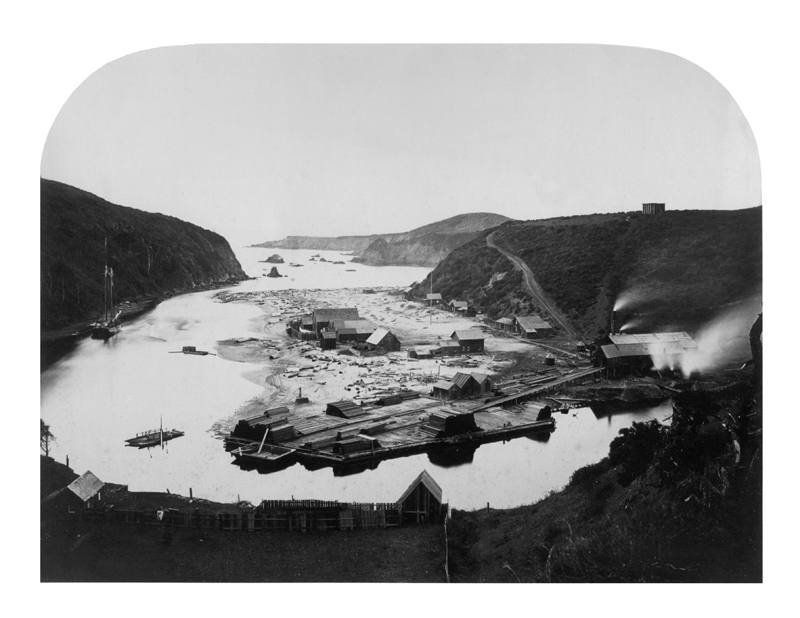
In our commentary on the landscape of processed foods, we reference the work of photographer, Carleton Watkins (1829-1916). His sublime views framed the American West as a land of endless possibilities and significantly influenced the creation of the first national parks.  However, many of Watkins’ photographs were commissioned by the corporate interests of the day; the railroad, mining, lumber and milling companies. His commissions served as both documentation of and advertisement for the American West. Watkins’ images upheld the popular 19th century notion of Manifest Destiny – America’s bountiful land, inevitably and justifiably utilized by its citizens.

We built these views to examine consumption, progress and the changing landscape.

(http://www.expocampaign.com/post/129274936191/barbara-ciurej-lindsay-lochman-processed-views)

Saturday, January 23, 2016

Viral Coverage - Processed Views in China, Featureshoot, Food & Wine


GIF of Moonrise on Bologna from Chinese language website, Hokk Fabrica.
Translation of webpage: "Have you ever thought of ham, french fries, sugar Valley circles, these junk food can also be used as the raw material of art? Barbara Ciurej and Lindsay Lochman two photographers as inspiration, a series called 'Processed Views' of art, with a pile of junk food to a natural landscape, remind us, are now in a brutal way consume nature, as well as our health."
Additional coverage of Processed Views appears in:
FeatureShoot (December 2014): Otherworldly Landscapes Made from Junkfood
Food and Wine (January 2015): Look at These Famous Photos of America Recreated with Junkfood


Wednesday, December 23, 2015

Pacific Midwest 2.0 Exhibition - INOVA Gallery


In addition to showing selections from Processed Views: Surveying the Industrial Landscape, we had the  opportunity to exhibit two Carleton Watkins prints that inspired some of our views. We are grateful to the American Geographical Society Library, housed in the University of Wisconsin - Milwaukee's Golda Maier Library, which loaned the prints for the duration of the exhibition. 
Yosemite Falls, 1867, Carleton Watkins


Sugar Loaf, Farrallon Islands, l867, Carleton Watkins

AGS Western Photograph Collection – This collection consists of albumen prints and stereoscopicslides by the photographers of the four great western surveys. These works include: 64 prints by William Henry Jackson, photographer with the Hayden survey, of Yellowstone, the Rocky Mountains of Colorado, and the Moqui Indian Pueblos of Arizona; 6 prints of the Grand Canyon region by John K. Hillers, photographer with the Powell survey; 49 prints and stereoscopic slides by William Bell, photographer with the Wheeler survey; and 441 prints and stereoscopic slides by Timothy O’Sullivan, photographer with the King and Wheeler surveys. Also included in this collection are 54 mammoth size prints of Yosemite by Eadweard J. Muybridge and 76 prints by Carleton E. Watkins.


Tuesday, November 17, 2015

LensCulture Earth15 Awards


We are honored to be a finalist in the LensCulture Earth15 Awards among such fine work. "The level of thoughtful approaches to communicating very complex ideas about conservation, climate change and the impact of human consumption on this planet was extremely impressive—not to mention the simple stunning beauty of many of the images.” —Molly Roberts, juror

— Molly Roberts, Juror

Expo2015 Milano: Feeding the Planet


We only wished this had come true as part of Expo2015, an international expo about food in Milan. We received a proposal from Positivo Diretto, an exhibition firm in Lecce, Italy, who wanted to use our images as 2.5m high totems to line the route through Lecce, the city hosting the delegates of Expo2015 in May. Unfortunately, they could not get needed permissions so we had to content ourselves with a feature on the Feed a Different Imagination Expo campaign site. Hoping for Expo2020 in Dubai!

Tiny Tiny Group Show


The Cola Sea from Processed Views was included in Tiny Tiny Group Show's UNREAL.  Thanks Kevin Miyazaki!

Tuesday, July 1, 2014

Interview with Pete Brook: Sugar-Coated, Corn-Fed Dioramas Query Big-Ag’s Food Production and the Naturalness of Landscape


We were thrilled to be interviewed by freelance writer and curator, Pete Brook 
posted on Prison Photography.org
30 June 2014

HISTORY, NATURE AND LANDSCAPE PHOTOGRAPHY
Today, June 30th, marks the 150th anniversary of The Yosemite Grant, signed by Abraham Lincoln, putting the protection of Yosemite Valley into the hands of the state of California with ‘the express conditions that the premises shall be held for public use, resort, and recreation, for all of time. The grant was a precursor to land-use-law that later led to the establishment of the National Parks.
There can be no photographer better known for the early exploration of the American West as Carleton Watkins (1829-1916). Nor is there a mid-to-late 19th century photographer (Ansel Adams did his bit later!) who shaped public opinion about natural spaces as much as Watkins.
What would Watkins say about the RVs that roll into Yosemite and Yellowstone each year? What would Watkins say about the monoculture agribusiness that dominates large swathes of the United States’ land? What would Watkins make of the ubiquity of corn syrup in our diets?
“The series Processed Views interprets the frontier of industrial food production, the seductive and alarming intersection of nature and technology,” write Lindsay Lochman & Barbara Ciurej in their artist statement. As we move further away from the natural sources of our food, we head into uncharted territory replete with unintended consequences for the environment and for our health.”
Processed Views is a witty and painstakingly constructed project that gets at some serious issues. What were Lochman and Ciurej thinking? Exactly how did they piece together these distopic dioramas that drip with E-numbers?   
see our photographs, Watkins' inspirations and find out why   click  Q&A 

Processed Views - Why Watkins? Why Food?

We view each of  the  10 major "food" categories depicted in Processed Views as a "conversation starter" around agricultural practices, food processing and unintended consequences for soil quality and our natural resources.  How did we come to this presentation for our concerns? 

We came to Processed Views from an earlier project, Ponder Food as Love which addressed the nature of nurturing. In those photographs, we were interested in picturing the emotional and physical energy that flows through the act of preparing and sharing food. We could not ignore, however, the flip-side of food consumption in America: a complex, impersonal system of industrial agriculture, food processing and marketing.  In the autumn of 2012, During one of our free-ranging phone conversations, the synapses fired, the web of ideas connected, idea was hatched…
A  Brief History:
We spent the first decade of our collaboration in the late 1070's  roaming, photographing and studying the landscape of America facilitated by the hospitality and generosity of Lindsay's family (sister Lisa, Aunt Christina, Ginny Starquist, Aunt Cordelia and Uncle Bob).  We thought a great deal about the hardships endured by the early photographers. We wondered if we could have produced photographs without the aid of our trusty Buick LeSabre luxury-mobile, coolers and instant coffee. 
When we became mothers back in the midwest, our annual photographic pilgrimages were cut short. In the subsequent years we developed an intimate knowledge of and  relationship with food.  We recognized that food in family life is about nurture, ritual and in forging emotional relationships. Processed Views is a response  to our historical circumstances as much as Watkins, the photographers of the USGS surveys, members of the F64 group or the New Topographers responded to theirs.

Why Carleton Watkins?
We turn to history and mythology to clarify and anchor our research. Looking back 150 years, Carleton Watkins iconic photographs honored unsullied nature and documented human behavior on the frontier. They were a revelation at that time.  His images record a critical time in the ongoing debate between industrial development and conservation.  We are now at a new critical point and the current discourse is fractured.  How can the state of our health, industrial agriculture, chemistry, biological modification of plants and livestock, water and land use, finite natural resources, demographic and geographical change be included in a single conversation?  
Referencing Watkins' sublime views and sites of nascent technological activity in California and Oregon, are an invitation to  viewer to consider an alternate reality in which the trajectory of our agricultural production is taken to an extreme. We fast forward to seductive, garish and static monocultures. 


Why food?
The land is threatened by our activities on many levels: energy extraction, manufacturing pollution, climate change…the scale is vast and opportunities for thoughtful encounters are infrequent and remote.  The most palpable and visceral link to the consequences of our actions is the food we eat. Our most intimate encounter with industrial scale production is processed food, we have an opportunity to consider the consequences of our actions one bite at a time. 

We showcase major components of our diet that are products of industrial development and marketing. 

We allude to Watkins' far vista in our tabletop landscapes, hinting at vastness, yet stranding the viewer a swale of familiar processed food products. The photographer's 18" x 22" Mammoth Plate Views were extraordinarily large and detailed in their time, but are now considered small. We use this format to force the viewer into an intimate encounter with components of the average American diet. The technological commitment to bend the forces of nature in order to fulfill fantasies of a yummy life and heroic expectations of feeding the world has been oversold.  Should we rethink our fun-food utopia in light of scientific evidence of dwindling resources and potential for irreversible harm to the land?

A conjecture filled with pathos….Is there is danger in selling a dream? 
One of the hardest working, most original and technically gifted of American photographers, Watkins' work was renowned aesthetically and aided the cause of conservation and publicly held recreational land. His photographs promoted a utopia: The American West. Throughout his life, Watkins was both unwise and unlucky in his business practices. A crushing blow in his 77th year came at the hands of Mother Nature in the form of the 1906 San Francisco earthquake. He continued to struggle to provide for himself and his family, dying blind and penniless in an asylum in 1916. 
His life  reminds us that there is only certainty of change and the unexpected when you construct a dream.

Thursday, May 8, 2014

We Agree with Stephen Colbert


Processed Views on Antron.com

Thanks, fellow photographer, Jing Yu for the heads up about our post in Antron.com

Processed Views on Lenscratch

We appreciate you kicked off the Lenscratch Collaborative Exhibition with our Processed Views.


In light of tomorrow’s Collaboration Exhibition, I thought it to be appropriate to share some collaborative work.  Barbara Ciurej and Lindsay Lochman, from Chicago and Milwaukee respectively, have been collaborating as a team for over thirty years.  Through this process they explore unified interests that strengthen their conversations and ideas between each other.  Collaborating as a way of making photographs always poses questions of leaders and button pushers, but in the case of Barbara and Lindsay they develop and divide work evenly.  Whether shooting together or separately, depending on the project, they always regroup to edit and exhibit together.
Today I’m excited to share their project Processed Views, which I have been privileged to see behind the curtain.  Through constructed landscapes made strictly from foods that make the chubby kid inside me drool, Barbra and Lindsay develop a commentary on today’s food culture and its digression from all things natural.  These handmade models are elaborate creations, holding their own as not only photographs but also sculptures.
Barbara Ciurej and Lindsay Lochman  began working together on photographic projects when they met as students at the Institute of Design in Chicago. They have developed an extensive body of collaborative work, chronicling rites of passage and documenting the psychological landscapes and social architecture that surround us.  The confluence of history, myth and popular culture is an ongoing theme in their collaborative work.
Exhibiting nationally and internationally, their photographs are in the permanent collections of the Art Institute of Chicago, Museum of Contemporary Photography, the Walker Art Center and the Milwaukee Art Museum. Ciurej is a photographer and graphic designer in Chicago. Lochman is a Milwaukee-based photographer and lecturer at the University of Wisconsin.
Thanks, fellow photographer and Lenscratch editor, Grant Gill.


Processed Views on Our Age is 13

Thank you, Molly Been, for this post in Our Age is 13 blog.

Monday, May 5, 2014

Saturated Fat: Marketing Anti-Fat Righteousness


"Everything in moderation" was my advice growing up, but history indicates Americans joyfully embrace righteousness and the more-is-more senario.  Nina Teicholz discusses the links between science, marketing, politics and saturated fat in her recent article, The Questionable Link Between Saturated Fat and Heart Disease.
"Saturated fat does not cause heart disease"—or so concluded a big study published in March in the journal Annals of Internal Medicine....The fact is, there has never been solid evidence for the idea that these fats cause disease. We only believe this to be the case because nutrition policy has been derailed over the past half-century by a mixture of personal ambition, bad science, politics and bias.Our distrust of saturated fat can be traced back to the 1950s, to a man named Ancel Benjamin Keys, a scientist at the University of Minnesota. Dr. Keys was formidably persuasive and, through sheer force of will, rose to the top of the nutrition world—even gracing the cover of Time magazine—for relentlessly championing the idea that saturated fats raise cholesterol and, as a result, cause heart attacks....Critics have pointed out that Dr. Keys violated several basic scientific norms in his study....Our half-century effort to cut back on the consumption of meat, eggs and whole-fat dairy has a tragic quality. More than a billion dollars have been spent trying to prove Ancel Keys's hypothesis, but evidence of its benefits has never been produced. It is time to put the saturated-fat hypothesis to bed and to move on to test other possible culprits for our nation's health woes.
Ms. Teicholz has been researching dietary fat and disease for nearly a decade. Her book, "The Big Fat Surprise: Why Butter, Meat and Cheese Belong in a Healthy Diet," will be published by Simon & Schuster on May 13, 2014.
Saturated Fat Foothills, from Processed Views

Thursday, April 3, 2014

A Rainbow of Colors for Any Occasion

http://www.special-education-degree.net/food-dyes/

Research for our latest Processed View addresses artificial colors and flavors in the painted dessert of party food. We must ask questions about the chemicals we ingest daily and on special occasions. One source of chemicals are the rainbow of dyes which help define our conception of fun food and party food. 

We have sought out the latest party food technology. You may think we have landed on the Blue Moon? Run the rapids on the Green River? No, we're shopping at Walmart. Happy Holidays!


Saturated Fat Foothills : Complicated Terrain


Saturated Fat Foothills from Processed Views: a Survey of the Industrial Landscape
NPR blog THE SALT continually updates the conversation regarding saturated fat in our diets.
Historically, there have been unintended consequences of demonizing foods. Consider the full-fat dairy paradox and the suicide-by-salami debate.

Wednesday, March 12, 2014

Book Review: Carleton Watkins the Complete Mammoth Photographs

An extensive biographical synopsis of Carleton Watkins and the impact of his work can be found at Tyler Green's Modern Art Notes where he reviews


Carleton Watkins: The Complete Mammoth Photographs by Weston Naef and Christine Hult-Lewis 


Watkins got his start as a photographer of commercial real estate. His photographs of Yosemite were enormously impressive when seen on the East coast, prompting the creation of Yosemite as a National Park and motivating Eastern painters such as Bierstadt to seek out a then-little-known Californian.  Creating the sublime view was Watkins’s signature technique:  "implying scale by placing dramatic objects — trees, rocks – in the foreground of his pictures, objects that would print darker than the massive mountains or other landscape elements in the background."
In discussing the origins of the Watkins monograph, Green mentioned collector and digital archivist Steve Heselton who launched careletonwatkins.org, an indispensible online repository with JPEGs of nearly all of Watkins’ known stereoviews. It has certainly been indespensable for our Processed Views project. 
Perhaps in part because he was mostly unaware of dominant Eastern art-making trend Watkins was uninterested in the dewy, often treacly fantasia that suffused 19th-century American painting. Instead, Watkins showed the landscape as it was: Grand and beautiful, but also as a resource that was tapped. Watkins didn’t just show us beautiful views from high places, he showed the land being consumed by prospectors, being blown up and blown through by the railroads, and he showed the natural landscape being replaced by San Francisco and by the sort of massive farms that first made southern California famous. He showed the lumber mills that decimated the Western forests and the mines that tunneled underneath the mountains and the smelters that broke down the found ore. He showed how the wealthiest Westerners, Watkins’s mates in San Francisco’s famed Bohemian Club, lived on their country estates.
Watkins established the Western landscape, the real Western landscape and not the manifest-destiny-driven (or Humboldtian) fantasy of it, as the grand American thing, as the subject with which American art would have to grapple. Watkins’s insistence on showing the land as it was — not just its beauty but also the land as it was used, even defiled by extraction-driven industries such as timber, mining and agriculture — pointed the way toward truth in American art. It was Watkins who pioneered the American realism that gave rise to the crusading honesty of Lewis Hine, Ben Shahn and Dorothea Lange, that led to the more nuanced revelations of the New Topographics photographers and the deadpan forwardness of Ed Ruscha. [Image: Watkins, Cape Horn near Celilo, Columbia River, Oregon, 1867. Collection of the Metropolitan Museum of Art.]
Other contributors to Carleton Watkins: The Complete Mammoth Photogrphs include Getty research associate Michael Hargraves, Bancroft Library curator Jack von Euw and Huntington Library curator Jennifer A. Watts.

Additional discussion about Watkins' and photographer Robert Adams' love of trees can be found at http://blogs.artinfo.com/modernartnotes/2011/12/for-the-love-of-trees-watkins-and-adams/