Sunday, January 16, 2011

The Three Sisters

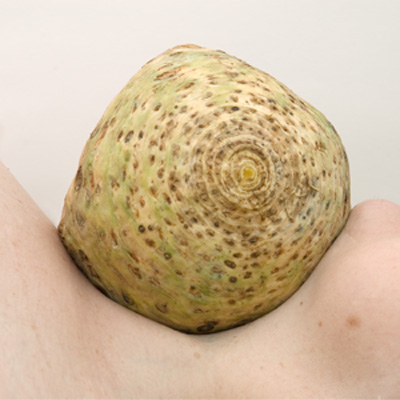
Time in the kitchen and in New Mexico made us aware of the three sisters.

Arriving at Plymouth, Massachusetts in December of 1620, the Pilgrims had little or no experience of farming. They brought no tools for fishing, nor did they have hunting skills or experience, which in Europe was restricted to the aristocracy. As religious and political immigrants, they embraced hard work and rejected any help from England. During their first winter, half of the 102 immigrants perished. Yet, within a generation, Pilgrims became a self-sustaining farming community.

Their salvation came from the Wampanoag Indians who taught them to hunt, fish and embraced the three sisters of nourishment: corn, beans and squash. These were the three crops that nourished all the Native Americans.

Potatoes and tomatoes were grown as ornamental plants in Europe in the 16th century and would not be adopted by the Americans until the 18th century. Two lesser vegetables were quickly adopted by the settlers as well as Europeans, sweet potatoes and Jerusalem artichokes.

-- Eating in America A History by Waverly Root & Richard de Rochemont

Saturday, January 15, 2011

2010 in Review

The Lunchbox Series, November

A cross-it-off-the-checklist endorphin rush:

ACTIVITIES and PARTICIPATION 2010


February

Ragdale Foundation Residency

begin shooting Consuming Passion and website renovation


October 14 launch

www.collectdotgive.org

Raised $19,920 since its inception in December 2009

There are still six more prints from Consuming Passion available for sale at the Collectdotgive.org site. 100% of the proceeds from the sales go to The Voices and Faces Project. Take a look.

Word of the site is spreading through a recent mention in this month's Elle Decor website.


July

Studio Space 2007-2 N Prospect, Milwaukee


August

Exposure Benefit for the MAM Photography Council: donation of portrait and workshop

Stella Critique Group participation


September - October

Society of Photographic Educators - Midwest Regional Conference 2010


Archive for Artemisia Artists and B. Ciurej and L. Lochman Photographic Projects


October

Bon Vivant for the Museum of Wisconsin Art: donation of portrait


Portrait after 30 years it was time to update our website image by participating in the Real Photo Postcard Survey by J. Shimon and J. Lindeman


December

Mail Chimp greeting card


Mini Portfolio Reviews MoCP/March, CAR/May, MNMVS/July and Stella/August


Travel NYPhotofest, Minneapolis, A.I.R. Opening


EXHIBITIONS 2010


June

To See Ourselves as Others See Us:

Contemporary Wisconsin Portraits

About the Curators: Graeme Reid, Assistant Director at the museum of Wisconsin Art and Debra Brehmer, art historian and Director of Portrait Society Gallery

JSOnline Review


July 2 - 24

Consumption Exhibition

The Center for Fine Art Photography, Fort Collins, CO

Consumption is a complicated word with a myriad of meanings and usages.

About the Curator: Brian Paul Clamp working for nearly two decades as a curator, Clamp holds a MS degree in Critical Studies in Modern Art from Columbia University and is the author of thirty publications on American Art.


October

featured in Romania blog oitzarisme

About the Curator: Constantin Nimigean


December 1 - January 2

At Her Age Exhibition

For the inaugural CURRENTS exhibition series at A.I.R. gallery examines how women at any period in their life, old or young, view their changing bodies. The exhibition addresses the questions: "How does age affect experiencing one's sexual/sensual life?" and "How does age impact one's evolving personal and social relationships?"


About the Curator: Martha Wilson is an artist and Founding Director of Franklin Furnace Archive, Inc. Since its inception in 1976, Franklin Furnace has presented and preserved temporal art: artists’ books and other multiples produced internationally after 1960; temporary installations; and performance art.

About A.I.R. Gallery: Advocating for women in the arts since 1972. A.I.R. Gallery is located at 111 Front Street, #228, in the DUMBO neighborhood of Brooklyn. Kat Greifen, Director.

More Anthropomorphic Vegetables in History

The Vegetable Museum - 07, Ju Duoqi, 2008 Napoleon on Potatoes


The Vegetable Museum - 03, Ju Duoqi, 2008 The Anatomy Lesson of Dr. Pickled Cabbage

The Vegetable Museum - 19, Ju Duoqi, 2008 The Birth of the Radish

I am happy that I have found a way of life for women who love the home. I have found an environmental way of bringing work and life together. From imagination to reconstruction and postproduction, it burns through tons of boring hours....As a medium that decodes time, photography is my favorite. Everything has a spirit, each vegetable, each person, and each second, under careful observation, has extraordinary meaning. What makes me happy is that when I see Napoleon on his Potato, I can think back to when I fried him up and ate him at two in the morning in the summer of ’08. Through photographs, memory becomes sentiment. I never leave the house, and when I do I rarely travel more than 15 kilometers. In a studio, with a knife, a box of toothpicks and some vegetables, I can make small sculptures and slap together big scenes, using a woman’s most effortless and thrifty method of fantasizing about the larger world.

-- from Ju Duoqi's artist statement regarding her Vegetable Museum

Thursday, January 6, 2011

Odd, Dark and Forgotten Christmas


Anthropomorphic edibles pictured on these postcards printed in the 18oo's were a favorite English fantasy associated with the eating and merriment of the season. These seem to sum up the season – the pot as fiery imp, Sir Loin getting knighted, and finally Santa served up as the main dish while elves dance round in glee.
From Christmas Curiosities, Odd, Dark and Forgotten Christmas by John Grossman.

Saturday, December 18, 2010

Greetings to all!

What would Little Jesus eat?


The birth of the candy cane is thought to be in 1670 A.D.

We feel that the information below is far more important:

2 cups sugar

1/2 c. light corn syrup

1/2 c. water

1/4 tsp. cream of tartar

3/4 tsp. peppermint extract

red food coloring


Cook sugar, corn syrup, water, and cream of tartar to a very hard ball stage (use candy thermometer: 250 to 265 degrees F.). Remove from heat and add peppermint. Divide into two parts and add red food coloring to one part and mix well. Once it is just barely cool enough to handle, the candy must be pulled and turned on itself over and over until it is no longer clear.Pull pieces of each part to form ropes and twist red around the white to make candy canes.

Preparation: approximately 45 minutes

Yield: 1 dozen

Greek Mint Myth

props for our holiday greeting, view it at the website


Our 2010 greeting mocks holiday hullabaloo and phony sentiment. We are in the habit of asking "what is the mythology or backstory?" We share what the Greeks thought:

Minthe, a naiad nymph was beloved of Hades. Displeased with this liaison Persephone trampled upon Minthe, crushed her and ground her into dirt. From Minthe's gore sprung the sweet smelling mint plant -- gnarly, growing close to the ground and destined to be trod upon.


Minthe, before and after Persephone's wrath.


Sunday, December 5, 2010

Props for Nurture


Searching for inspiration, odds for any of these eager foods is about 1 in 8.

Nurture Rituals

Meat 'n Potatoes from Consuming Passion


We just posted the Lunchbox Series on the website. Here are two nurturing rituals which are legible as diptychs.

Thursday, October 14, 2010

Collect.give: great photos - greater good


We are thrilled to have our image from Consuming Passion as the latest offering on collect.give.

collect.give was founded in December 2009 by photographer Kevin Miyazaki as a place to collect contemporary photography and donate to worthwhile causes at the same time. The photographers featured on collect.give have pledged to donate 100% of the profits from their print sales to causes they personally support. For details go here.

We pledge 100% of the sales of our print (edition of 25) in support of The Voices and Faces Project. Founded by Anne K. Ream, a writer and longstanding advocate for women's issues, The Voices and Faces Project is a national documentary initiative bringing the testimony of sexual violence survivors to the attention of the public in order to raise awareness of how this human rights and public health issue impacts victims, families and communities. Through photography and stories, the project speaks truth to the often outdated, damaging and limiting notions society has of the sexually violated by giving voice and face to rape survivors. In their recent project, they traveled to Mexico to meet with the women of Atenco, a courageous community of survivors who are standing up and speaking out about the sexual violence and torture that they have endured at the hands of the police.

For us, the use of photography and storytelling in the service of their cause mirrors our own belief in the importance of photography as a way to document injustice, and as a means of personal expression and healing. We hope you will join us in supporting The Voices and Faces Project by purchasing one of our prints.


from the Real Photo Postcard Survey


Friday, September 3, 2010

Consuming Opinions in one week

Interesting: everybody dives in with an opinion, they are all experts on food and flesh...

8/21/10

1.

o beets, a "stand apart" image, introductory

o radishes were "common" - soft pornish

o she liked the more abstract/didn't respond to the humor

o FLESH AS BACKGROUND was most effective - didn't like the blue tones

o liked pressing into flesh radioccio image

o liked small size...images could read more precious (common idea?)

o compare and contrast by shooting in film also

2.

o saw we had 2 ideas: sexy/creepy and playful/clever

both funny and had conceptual depth (as opposed to academic AllThings)

o shown as groups cuz they are NOT stand alone type images

o liked high key pallette

o liked complex design, like reading an alphabet when grouped

o consider floating frame, white frame, big mat

o psycho dimension in sexier ones (pit, neck, mushrooms, chive, ham/cheese)

o liked how they weren't seen as flesh immediately


8/25/10


metaphor for growth/resonating skin with texture

love that color


Best when total transformation...melding food and body and becomes other

(celeric, peanut, potatoes) most abstract

Best when you stop wondering what part of the body and it just IS -

Stuck by mushroom


Combos, ham & cheese with bread picture--the lunchbox series


parts segments interesting -

invitational moments -

expected relationships, and then the unexpected

by the end of series, maybe ALL body parts could be used


OK to crop orange and hair OK plus the melding/embracing sense is good

spuds look like birthing -

nestling in pouring out


TRY

violation -

smashed squished, spilled seeds (vs the cut of the papaya/belly/scar)


check out scale -- bigger may be iconic (whole show maybe 5 images)

very large....the figure and form may transform...can the transformation happen large


like sense of no human hand


check out KODAK ultra color film


check ____________Mandlebaum

Marilyn Mintor

Jean Dunning

Peter Greenaway -Drowning by numbers

Glen Gary Ketchum

Ursa Books across from Gagosian (colleen recommends)

Uta Barthes

Dodd Camera Armitage and California

Self Publish-Be happy site

lovely press jon gittleson


Like shriveled -

Like Ambiguity -

Like colors/pallette


conjure different unexpected food combos -

push away from expected food fotos


cut back on centered images


try changing the llighting, which may change the meaning


anecdote: your eyebrows are indicative of your grooming in general, beneath your clothes


check out chinese photographer at Smart Gallery MADE IN CHINA Show who works with

HONEY


Consuming Ragdale

In February 2010, we spent our Ragdale Foundation residency working on ideas for Consuming Passion.


Meadows Studio

Meadows Studio from east

View from Meadows Studio


swathed in north light

testing, testing, testing