Wednesday, March 6, 2013

Vegetable Guns


A series of portraits of women holding guns fashioned out of vegetables and other ingredients taken in numerous different countries and regions. The toy-like guns are made by tying together the ingredients from local dishes chosen by the local women who serve as the models. After being photographed, the ‘vegetable weapons’ are dismantled and the ingredients tossed into a cooking pot. The project participants then share and enjoy the meal together. What was the parodying of a war scene turns into a scene of ordinariness and interaction in the form of the sharing of a meal. This project has taken place in various countries around Asia, America, Europe, and Africa. This often-humorous ‘disarmament’ process not only helps build communication with people around the world but also serves as an introduction to various different food cultures. One could say the series encourages the audience to think about peace by gently hinting at the foolishness in hostility and fighting among people.

Graflax from Iceland / New York, 2002

Nam puri / Chiangmai, Thailand, 2004

Katogo (Simmered vegetable with banana), Hoima, Uganda, 2008

The Lunchbox Book


Ponder prepared food


Rhubarb who knew?


Sunday, December 23, 2012

Consider the Tondo

madonna-della-seggiola-rafael
Madonna della Seggiola (also known as Madonna della Sedia)Rafael - 1513-1514


Our agenda has changed as we consider Ponder Food as Love as an exhibition. 

We wish to liberate ourselves from gravity and rethink  presentations based on the Cartesian Grid  (a co-ordinate system whose axes are straight lines intersecting at right angles). Activating our upcoming exhibition installation in order to instigate pondering by our audience in a public space has motivated us to consider the tondo.  This format was quite popular in Florentine Renaissance representation of sacred and miraculous relationships. It soon fell out of favor, apparently it was considered too domestic a format to be used in important public spaces.

"The concentric system represents matter or forces of some kind that are concentrated around a center, e.g. the planets circling the sun, or children surrounding their mother...." They are therefore considered complete and unto themselves. 
Madonna and Child by Andrea Della Robia, 1435-1525 

The Holy Family, Michelangelo Buonarotti, ca.1504


 Inquiry into this form at Thinking about Art described
Round things, like bubbles, float...just like the imagined gravity-free beings. Or roll around. They can be anywhere; they are fixed nowhere. And, like a round egg (have you seen spider eggs?), a round (or spherical) object is often a self-contained "world" that has everything it that it needs to sustain itself without having access to anything beyond it. As long as the contents are "sealed into" that round or spherical container, they can exist on their own. Once the bubble breaks, however, they enter our world.... Round artworks are not meant to break. They are meant to be seen as a vision of another world that's not in our world at all and that is never going to be. Something beyond our reach. This is one reason that religious subjects are especially appropriate subjects for round artworks.


Saturday, November 17, 2012

Inspiration: Ernie Button

Cerealism #30

Cerealism #23


Ernie Button  was recently brought to our attention--a master of cereal photography.

Wondering About the End of an Era...or a New Frontier


A little background on the Culinary Industrial Complex:
A study by Paul Johnson and Paul Kenny at the Scripps Research Institute (2008) suggested that junk food consumption alters brain activity in a manner similar to addictive drugs like cocaine or heroin.[6] After many weeks with unlimited access to junk food, the pleasure centers of rat brains became desensitized, requiring more food for pleasure. After the junk food was taken away and replaced with a healthy diet, the rats starved for two weeks instead of eating nutritious fare.[7] 


 November 16, 2012
 from the Corporate Intelligence Blog/Wall Street Journal
 by Tom Gara
And that’s that: Hostess Brands, maker of Twinkies, Wonder Bread and more, announced this morning it has filed a motion with bankruptcy court to start liquidating the company immediately. A huge number of jobs are soon to be lost.
“Hostess Brands will move promptly to lay off most of its 18,500-member workforce,” said CEO Gregory F. Rayburn in the statement, “and focus on selling its assets to the highest bidders.”
In a letter posted on a new site set up to communicate with employees and suppliers through the liquidation process, Mr. Rayburn pinned the blame on its striking union:
Despite everyone’s considerable efforts to move Hostess out of its restructuring, when we began implementing the Company’s last, best and final offer, the Bakers Union chose to stage a crippling strike. This affected Hostess’ ability to continue to make products and service its customers’ needs and pushed Hostess into a Wind Down scenario. As a result, we are forced to proceed with an orderly wind down and sale of our operations and assets. We deeply regret taking this action. But we simply cannot continue to operate without the ability to produce or deliver our products.
There’s no way to soften the fact that this will hurt every Hostess Brands employee. All Hostess Brands employees will eventually lose their jobs – some sooner than others. Unfortunately, because we are in bankruptcy, there are severe limits on the assistance the Company can offer you at this time.
And for suppliers, the situation is also dire, wrote Rob Kissick, the company’s senior vice president for purchasing:
Any orders in process are cancelled immediately. Any product in transit will be or has been returned to the shipper. We have retained a Wind Down Team that will continue on to assure that the business shuts down in an orderly fashion. It is unknown at this time what will happen to unpaid vendor invoices or whether sufficient funds will be ultimately made available for payment.
There has been no word yet from the Bakery, Confectionery, Tobacco Workers & Grain Millers (BCTGM) union that was leading the strike — we’ll update when there is. Also one to watch is the response from the Teamsters Union, whose members earlier voted to accept the new labor deal offered by the company and have not been participating in the strike. Yesterday, the Teamsters said current strike put it in a “horrible position,” where members were being asked to “support a strike that will put them out of a job.”
So does this mean the Twinkie is gone for good? Not necessarily, the WSJ’s Rachel Feintzeig reports:
Adam Hanft, a branding strategist behind Hanft Projects, sees the potential for new life in the death of a decades-old company. A fresh owner of the intellectual property, which includes everything from names to recipes to graphics, could revitalize the Hostess brands, which Mr. Hanft sees as weakened but not lacking potential. He raised the prospect of new flavors, limited-edition Twinkies, products co-branded with independent music groups and the potential for an international reach.
“Its nutritional emptiness in the right hands could be its core strength,” he said, explaining that a buyer that embraces the brand’s “kitschy,” “deliciously retro” feel could be rewarded. He foresees a potentially diverse crowd of bidders for the property.
“It’s the kind of iconic brand that might attract people who might not otherwise be interested in owning a consumer good,” Mr. Hanft said.
Related: Rachel Feintzeig has more on Hostess’s closure on Markets Hub.

Du Jour mention in FEATURE SHOOT

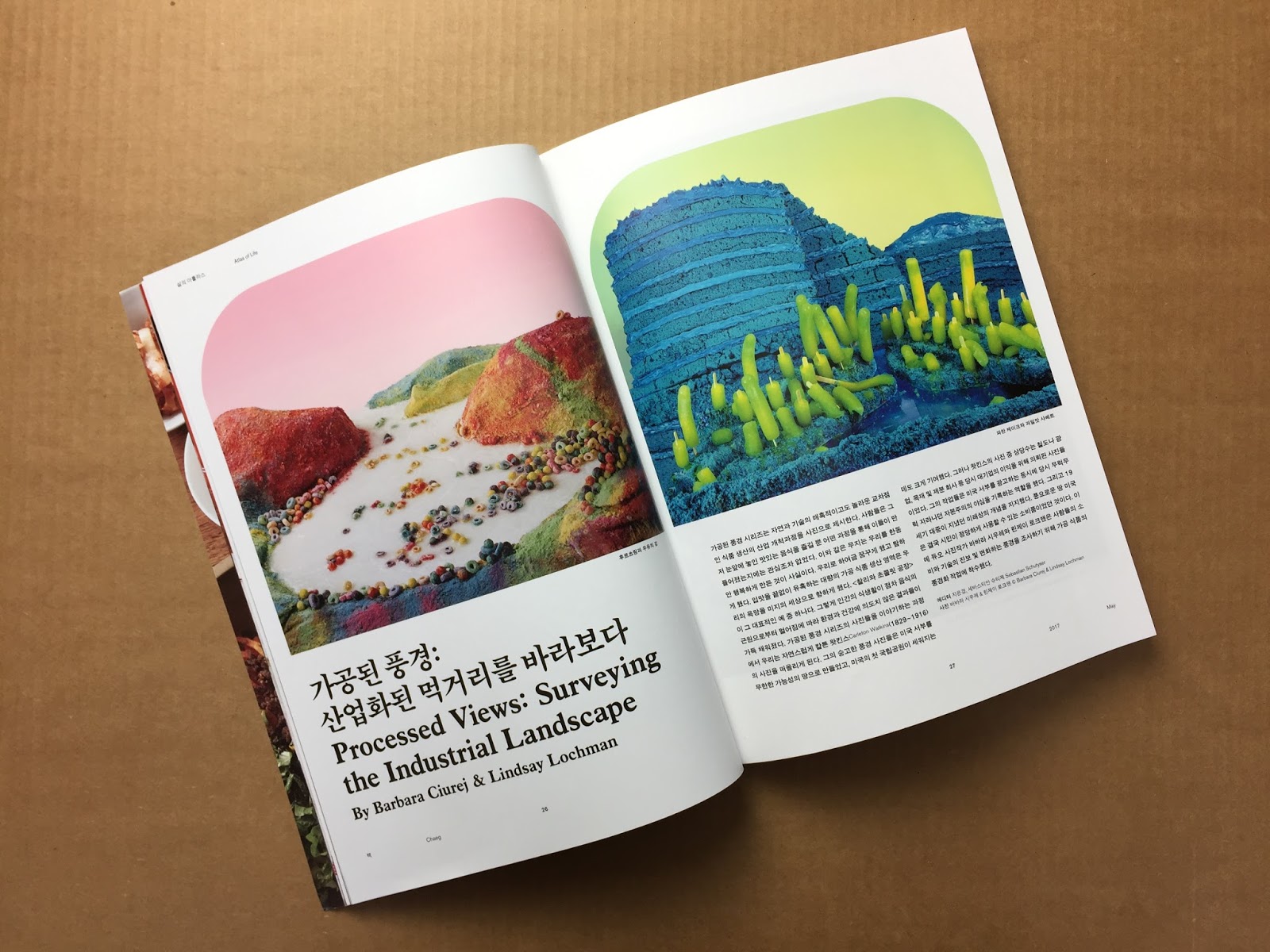
We appreciate this mention in Feature Shoot for our new project, Processed Views, a depiction of  the bountiful frontier of 21st century industrial exploitation. Thanks Alison!

Feature Shoot is run by photo editor and curator Alison Zavos and showcases work from up-and-coming photographers alongside established photographers who have completed a project or whose work has taken on a new direction. The site covers commercial and fine art photography, and is a resource through which photo editors, art directors, art buyers, and people with an interest in photography can discover new talent.
Established in 2008, Feature Shoot has an archive of over 2,000+ international photographers. In 2011, Feature Shoot was selected as a winner of LIFE.com’s 2011 Photo Blog Awards: ‘the Web’s 20 most compelling, most consistently insightful and surprising photography blogs.’
In addition to running Feature Shoot, Alison Zavos is active member of the broader photography community. She has reviewed portfolios for organizations such as ASMP, APA (Advertising Photographers of America) and The Art Directors Club. She has also spoken on various panels discussing topics such as the impact of new media, marketing, press and photography blogs and is a regular contributer to PDN’s Emerging Photographer magazine.
In the summer of 2010, she curated Sea Change, a group show as part of the Wassaic Summer Festival, which featured work from 25 New York photographers. As part of Photoville NYC (2012), Zavos co-curated a group exhibition entitled Underage, which featured work by six young photographers who document the joys and travails of growing up: a time of first loves, experimentation, and the search for belonging.
http://www.featureshoot.com
Recent Press:
The New Yorker (Photo Booth blog): Underage in Photoville, June 21, 2012
PDN: Favorite Sources for New Photography, Photo Annual 2012
Lenscratch: Underage, Young Photographers, June 16, 2012
Lost At E Minor: Underage: a group show of young photographers, June 15, 2012
I Love Texas Photo, Interview with Alison Zavos, May 29, 2012

Monday, July 16, 2012

Dialogues Among Giants - Getty Center

"Watkins was best known for his photographs of Yosemite, but he also took his camera to the silver mines of Nevada and Arizona, and up and down the Pacific coast. Throughout his career he applied his understanding of the elements of landscape as art. His early work with mining subjects proved to be excellent training for his eventual vision of landscape as a powerful counterbalance to the fragility of human existence. He harnessed the elements of visual form—line, shape, mass, outline, perspective, viewpoint, and light—to enliven often static motifs in nature."
From the exhibition, Dialogues Among Giants: Carleton Watkins and the Rise of Photography in California at the Getty Center, J. Paul Getty Museum. Link to an informative slide show and accompanying exhibition publications. 


In Focus: Carleton Watkins


Carleton Watkins in Yosemite


Sunday, July 15, 2012